KubeCon India 2026: A sense of community amongst all of the hustle and bustle
Posted: June 29th, 2026 | Author: sabre1041 | Filed under: Uncategorized | No Comments »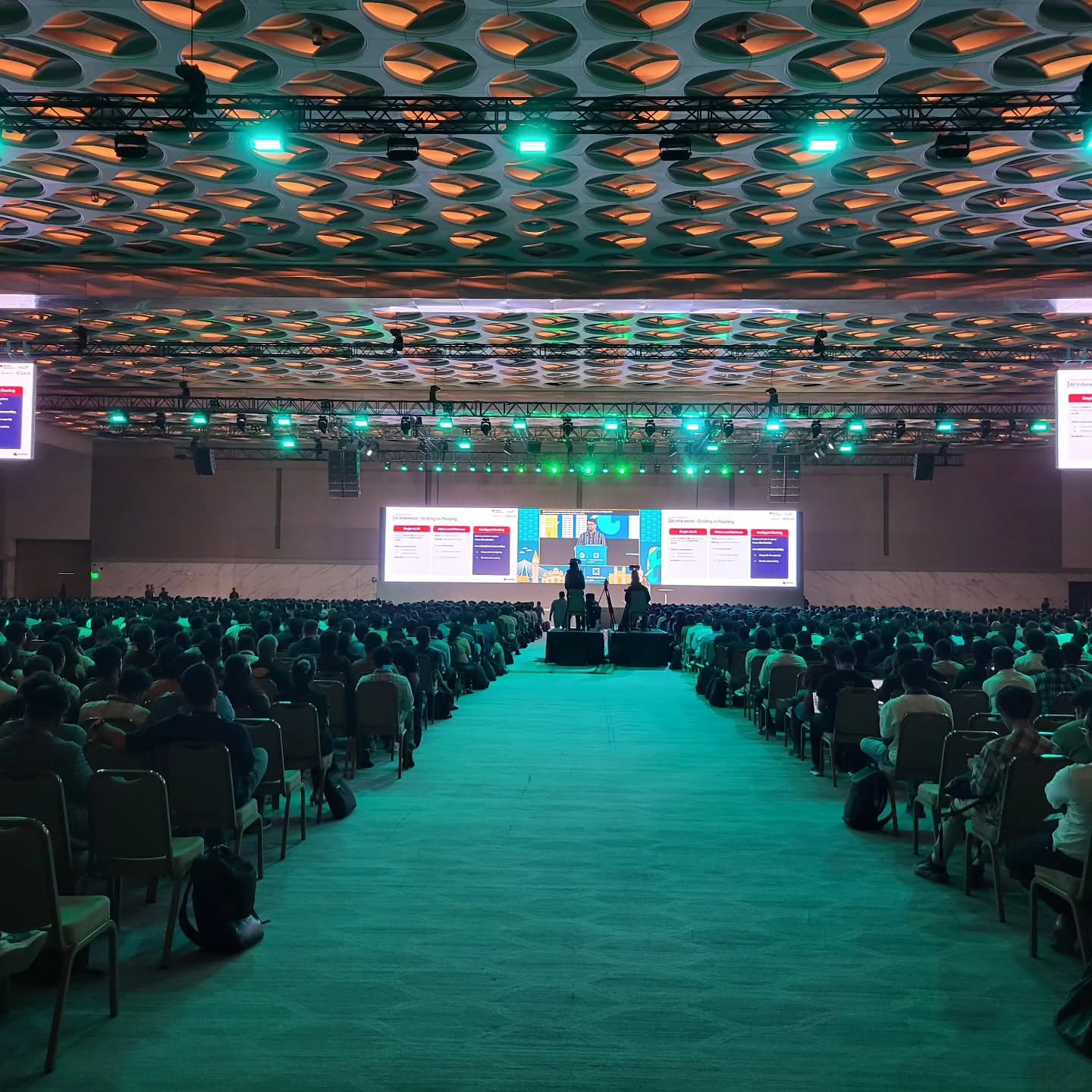
If you have ever visited India, you can certainly relate to the constant chaos that fills the streets. Pedestrians, businessman, street vendors, workers and the never ending gridlock is just some of the sights and sounds that are synonymous with one of the most populous countries in the world. The cloud native community recently descended upon the city of Mumbai for a week filled of Open Source collaboration for Open Source Summit India and KubeCon + CloudNativeCon India 2026. I had the opportunity to attend KubeCon + CloudNativeCon India 2026 and I wanted to share my experiences as it was certainly an event that I will never forget.
A familiar, but unique spin on the KubeCon we have come to know
For those that have ever attended a KubeCon event previously, many of the primitives remain the same. There are still the daily Keynotes where industry and community leaders take the stage to share how they are using and embracing Cloud Native technologies. There also also the breakouts where members of the community share how they are not only using, but evolving the Cloud Native to take advantage of what is available today as well as develop tomorrow’s innovations. My favorite, as always, is spending time traversing the vendor showcase and the Project Pavilion where CNCF projects have the opportunity to connect directly with the community (more to come on that aspect in a bit).
Looking back, there were several unique differences when comparing the other KubeCon events that I have attended in the past and KubeCon India. First, the number of attendees is much smaller than the powerhouse events of KubeCon North America and KubeCon EMEA. Those events typically range between 8,000-13,000 attendees depending on the year and locale. It was estimated that there were around 3,500 attendees at KubeCon India. The reduced size not only made it feel less chaotic, but afforded the opportunity to make more impactful connections with attendees. In addition, the venue space at the JIO World Convention Centre was much more compact, eliminating the long distances between sessions that are common in some of the larger event spaces. Don’t worry, we all got our exercise in other ways.
Another key difference was that the event felt “less corporate”. Of course, there were plenty of vendors represented at the event, especially within the Solutions Showcase area. My organization, Red Hat, had a presence and as always, the booth was filled with a constant stream of attendees learning about how Red Hat participates amongst CNCF communities and how our solutions are helping power some of the largest organizations in the world. Of course, there was plenty of swag to be had which is always appreciated by the attendees. However, even still, the event did not feel like it was dominated with vendors (physical presence or within the program).
The second big difference that I noticed and maybe it is because I am getting up in my years, was that the conference had a younger demographic. Personally, I was thrilled to see this. Getting into cloud native technologies and the encompassing community early on is an opportunity to drive not only build within their career ambitions, but a lifelong passion for Open Source. By having the event be more intimate provides each attendee the chance to make an immediate impact within the Cloud Native community. I took the opportunity myself to have conversations with as many individuals that I could to not only learn what they are working on, but hear about their future ambitions. I formed a number of connections that I will look to further strengthen moving forward.
AI Continues to Take the Center Stage
I would be lying if I said that AI did not represent a core component in the event. AI related content was present amongst the Keynote sessions, vendor solutions, CNCF projects and become integral to almost everything we do in the cloud native community. AI and its related ecosystem was the primary reason that I attended the event.
I am one of the maintainers of the ModelPack project, and one of the opportunities that the CNCF provides for their communities is the ability to share the latest updates within their project during a lightning talk at the event. Attendees got a chance to learn about what the ModelPack project is, what its goals are, and most importantly from a maintainer perspective, how to contribute. ModelPack is helping standardize how AI/ML models are defined, packaged and distributed using OCI artifacts. If you are interested in learning more about the project including how to get involved, utilize any of the following artifacts:
Strengthening the CNCF Ecosystem
The best way to learn about CNCF projects at any KubeCon event is to make a visit to the Project Pavilion. Here, each project has a vehicle for not only interacting directly with the community, but to show off some of their latest features and what they are working on. Aside from being an attendee and visiting as many of the project booths as I could, I did take a shift at the Argo booth as I actively contribute to the Argo CD community and evangelize the use of GitOps based solutions to manage Kubernetes environments. Even though Kubernetes is over a decade old, there are still a lot of individuals and organizations who are just getting started with Container orchestration systems and the common management challenges that approaches, like GitOps, and solutions, like Argo CD, attempts to solve. It is also interesting to hear how others are using Argo CD including some of the feature that they are seeking in future releases.
Building Connections
One of the most satisfying parts of not only KubeCon, but any conference is the ability to establish new connections and strengthen existing ones. I already touched upon developing new relationships previously. However, nothing made me happier to reconnect with those that I have worked with in the past. These include fellow Red Hatters, community contributors, and even those who have helped me amplify my voice through publications to share my love and passion with others. I even had the opportunity to meet an individual that I had mentored over a decade ago during his time at Red Hat. Hearing how my contributions helped positively impact his career brought me the greatest joy from the entire event.
The Unique Travel Options of India

For those that know me, I love immersing myself in the culture of any location that I visit throughout the world. The travel options in India extends beyond the typical options of Taxi’s, Ride Sharing, and public transportation. I took advantage of as many options as possible including the impressive Aqua line on the Mumbai Metro system to both explore the city along with return back to my hotel one evening after the conference (One of the best parts of the Metro is that the stations and trains are climate controlled – essential as temperatures reached 40C with humidity to match).
During this trip, I noticed that auto rickshaws, a common fixture in major Indian cities was bookable via the Uber app. Paying for items in India as a foreigner can be a challenge given that the primary payment method accepted by most vendors (UPI) is not available for most foreigners. However, with auto rickshaws available via the Uber app, it became my primary mode of transport while in Mumbai. Looking back at the receipts, most of my rides throughout the week ranged between $1.00-$2.00 (no, the decimal is not incorrectly positioned). Scary given some of the prices that I have been recently quoted with Uber in my own backyard. However, only a fraction of the available auto rickshaws participate in uber (even less accept Uber as their payment option instead of cash). While for the most part this wasn’t a concern, it did become a challenge when a large number of requests from conference attendees attempting to leave the event flooded the already constrained market (the laws of supply and demand was not on our side). A trek over to the aforementioned Metro station provided an alternative mode of transportation in this case.
The Rise of Regional KubeCon Events
While this was my first KubeCon conference outside of the mega North America and EMEA events, it is highlighting a trend that has been gaining popularity in recent years. What was once just two flagship KubeCon’s events has more than doubled in size and grown into five (5) events worldwide.
- EMEA
- India
- Japan
- China
- North America
This pattern helps grow the Open Source community into some of the most impactful and emerging markets. Of course, there are also additional regional events, supported through the Kubernetes Community Days (KCD) effort to enable as many individuals as possible to connect with the Cloud Native community. I had an amazing time at KubeCon India and look forward to not only participating in the event again, but also look for ways to participate in some of the other venues worldwide into the future.
Recent Comments